
New strategy advances inclusion, diversity, equity & accessibility in health data research


HDRN Canada has released a new strategy to advance inclusion, diversity, equity and accessibility (IDEA) across its network and the broader health data research ecosystem. “This strategy is critical for identifying opportunities to disrupt oppressive systems and to build a values-driven foundation for transformational data use across Canada,” said Dr. Amy Freier, Chair of HDRN Canada’s IDEA Team.
The IDEA Strategy was developed following an environmental scan and a six-month consultation process involving HDRN Canada member organizations. The result is a clear roadmap for embedding IDEA into every aspect of HDRN Canada’s work and for strengthening its integration within the organization’s Strategic Plan.
This strategy is critical for identifying opportunities to disrupt oppressive systems and to build a values-driven foundation for transformational data use across Canada ~ Dr. Amy Freier
Led by the IDEA Team, the strategy was developed with input from across the network, including the Board of Directors, Executive Committee, Leads Team and staff. The collaborative process was designed to ensure diverse perspectives were heard and reflected. A facilitated process was designed grounded in consensus building. “We wanted to ensure everyone had an opportunity to contribute to the co-creation of HDRN Canada’s IDEA Strategy,” Dr. Freier explained. “We also relied upon network members to provide content expertise related to the integration of IDEA within HDRN Canada’s technical projects and services.”
The co-creation process took place over six months and consisted of strategic thinking sessions, focus groups, round tables and informal interviews. Thirteen key themes emerged and were ultimately distilled into four core strategies:
- Learning and unlearning
- Facilitating IDEA in health data research
- Building trust and reciprocity with community partners
- Providing leadership and advocacy to advance IDEA


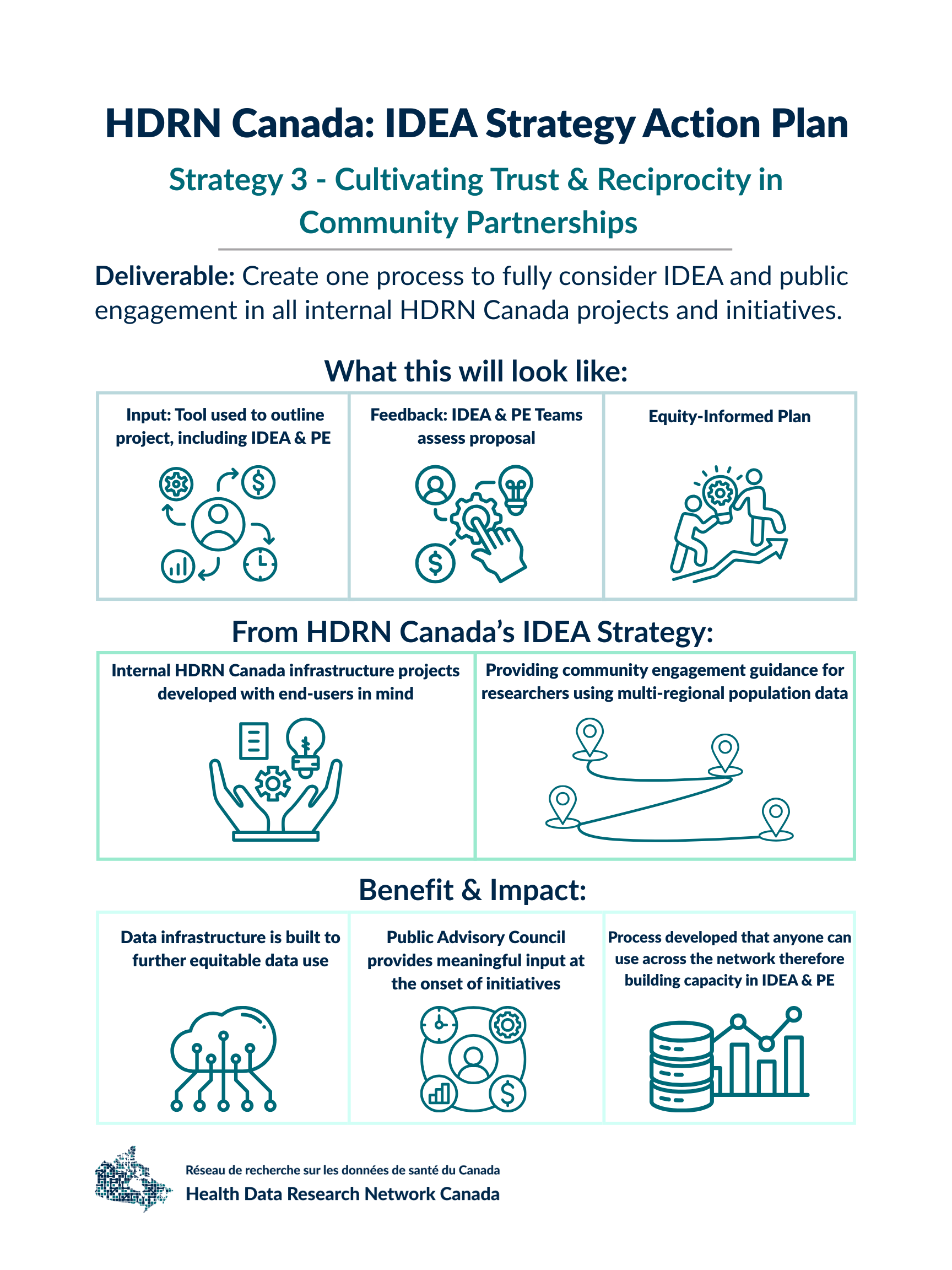
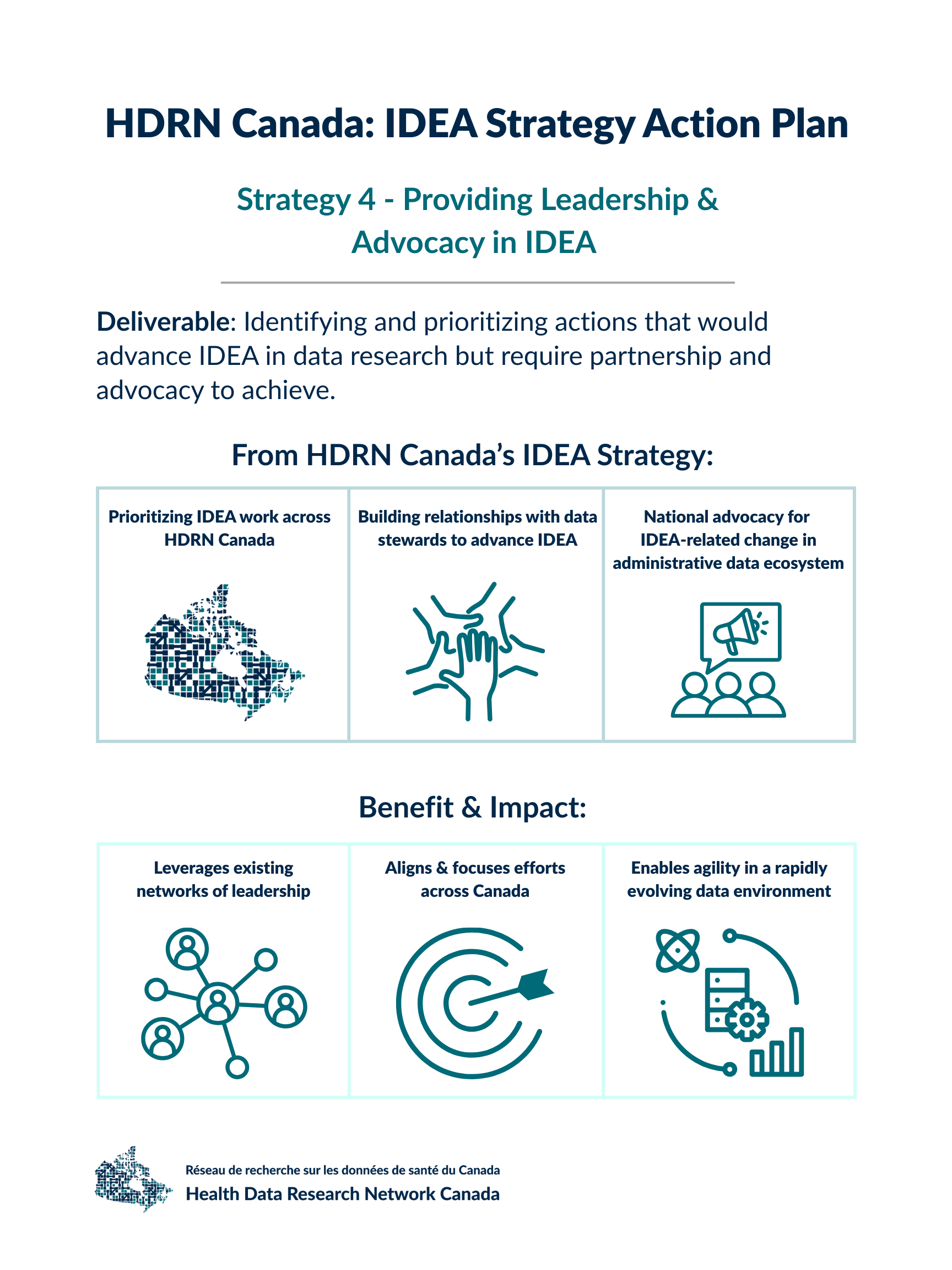
HDRN Canada’s IDEA Strategy has critical implications for the way we think about and conduct research with routinely collected data. It advances our understanding of how systemic oppression is manifesting in routinely collected data and offers guidance for embedding inclusion, diversity, equity and accessibility throughout the research process,” said Dr. Nathan Nickel, HDRN Canada Executive Member and sponsor of the strategy. “We are implementing the strategy internally, at HDRN Canada data centres and member organizations, and hope it will become an important resource in the Canadian health data ecosystem more broadly.
A draft version of the strategy was shared at a network-wide town hall, where additional feedback helped inform a detailed action plan that is now underway. The Learning and Unlearning Strategy has already been activated through the launch of HDRN Canada’s Unlearning Club, an online learning module and video series explores IDEA-related topics in the workplace and across the health data ecosystem. Additional tools, resources, and reflection papers are also in development.
“Our approach to embedding IDEA into our network and our collective work has been thoughtful and intentional,” said Dr. Kim McGrail, HDRN Canada’s CEO and Scientific Director. “There is always more work to do, but we now have clear, achievable steps, the right people engaged, and momentum toward lasting change.” She emphasized that IDEA remains a top priority for HDRN Canada. “From the beginning, we have said that IDEA—like Indigenous data sovereignty—needs to be baked in, not added on. Our refreshed Strategic Plan reflects this commitment and will be released soon.”