
Quantifiable Indigenous Concepts: Increasing Precision of Population Analysis by Including “Indian Act” Legislation

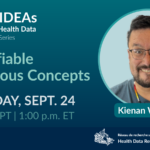
How do we make Indigenous population data more precise—and more meaningful? In this presentation, Kienan Williams introduces seven Quantifiable Indigenous Concepts (QICs) developed from Canada’s 2021 Census of Population, and explores how they can strengthen the way Indigenous populations are identified, disaggregated and analyze. With 1.8 million people self-reporting Indigenous identity in the 2021 Census, accurately disaggregating Indigenous populations requires appropriate quantitative methodological tools. Kienan will draw on both quantitative methods and his lived experience as an Indigenous person represented in population datasets to explore why these distinctions matter.
Keinan will take a closer look at the approximately 0.9 million people in the Status Indian population and the importance of accurately representing this population in quantitative analysis. He’ll also introduce Quantifiable Indigenous Concepts Identification (QICIDs), a methodology designed to bring together quantitative sources of Indigenous population data and support analysis that is more precise, consistent and meaningful.
About the Speaker:
Kienan Williams spent three decades moving around northern and southern Ontario before settling in Calgary, Alberta, where he has lived, worked and played for the past decade. His education and professional work have focused on public health and applying systems thinking to improve health outcomes for populations, with a particular focus on First Nations people.
Kienan writes and works from an Indigenous, decolonial and critical constructivist perspective. His approach is Indigenous because he is Anishnawbe, Cree and First Nation, and is registered under the Indian Act and with Sandy Lake First Nation. It is decolonial because he applies quantitative methods to analyze colonial legislation through epidemiological studies of Indigenous population health in Canada. Kienan also draws on a critical constructivist approach to examine and challenge foundational misunderstandings about Indigenous Peoples, who are sometimes described as among the most studied populations in the world.
About the Series:
The Big IDEAs About Health Data Speaker Series brings together leading voices from across research, policy, health care and the public sector to explore how administrative data can be used to advance health equity in Canada. Through thought-provoking presentations, speakers examine the responsible use of disaggregated data—including sex and gender, race and ethnicity, disability, income, housing, language and other social determinants of health. They also spotlight emerging research methods and data research practices that embed inclusion, diversity, equity, accessibility and community perspectives into algorithms, distributed analytics, community involvement and equity assessment tools.
Missed a session? Watch recordings of past webinars. External Link. Opens in new window. and explore the ideas shaping the future of equitable health data research.